
Table of Contents
- Introduction
- Demographic Shifts Influencing Housing Markets
- Technological Integration in Homebuying
- Impact of Remote Work on Housing Preferences
- Emphasis on Sustainable Living
- Rise of Mixed-Use Developments
- Affordability Challenges and Community Responses
- Looking Ahead: The Future of Homebuying and Community Development
- Conclusion
The landscape of homebuying is evolving, and these changes are leaving a significant imprint on communities nationwide. From shifting demographics to technological advancements, understanding these trends is crucial for both buyers and community planners. For instance, Fairfax County VA real estate agent Cheryl Folmer, a seasoned professional with over 20 years of experience, has observed firsthand how these dynamics influence local neighborhoods. Through her platform, Lifestyle Via Real Estate, Cheryl offers comprehensive services to clients in Northern Virginia, Maryland, West Virginia, and Washington, D.C., helping them navigate the complexities of the real estate market.
Demographic Shifts Influencing Housing Markets
Recent data reveals a notable increase in the average age of first-time homebuyers. For instance, in Phoenix, the average age has reached 40, reflecting broader national patterns. This delay is attributed to factors like rising housing costs and economic uncertainties. As a result, communities are adapting to cater to older first-time buyers, influencing the types of amenities and services offered.
In addition to age, other demographic trends are coming to the forefront. More households are being formed by multigenerational families, including the grandparents, parents, and children living under one roof, partly as a result of economic pressures and shifting cultural values. This has spurred builders and community developers to design homes with flexible layouts and adaptable spaces, incorporating features that accommodate varying ages and lifestyles. These might include accessory dwelling units (ADUs), in-law suites, and shared outdoor spaces, helping families maintain privacy while living together.
Another demographic factor influencing housing markets is the increased diversity of homebuyers. Immigrant populations, younger professionals, and single-person households are shaping new preferences in home features, locations, and community resources. The emphasis on creating inclusive, culturally rich neighborhoods is leading to the redesign of community centers, local businesses, and public spaces to better serve a wide array of resident backgrounds.
Technological Integration in Homebuying
The rise of digital platforms has transformed the homebuying process. Virtual tours, online listings, and digital transactions have become standard, making the process more efficient. This shift not only benefits buyers but also encourages communities to enhance their digital infrastructure to support these advancements.
Technology also supports greater transparency and consumer empowerment. Potential buyers can now access comprehensive data sets on neighborhood crime rates, school performance, walkability, and even environmental risks, all before ever setting foot in a city or touring a home in person. For sellers and real estate agents, digital platforms enable targeted marketing and predictive analytics, helping them better match properties with potential buyers’ interests. In turn, communities see increased engagement as new residents arrive already equipped with detailed knowledge about local amenities, businesses, and civic services.
Many local governments and developers are prioritizing investments in smart city technologies, such as integrated transportation apps, municipal Wi-Fi, and digital permitting processes. These enhancements not only attract tech-savvy homebuyers but also lay the groundwork for future growth and resilience against disruptions like natural disasters or economic downturns.
Impact of Remote Work on Housing Preferences
The prevalence of remote work has led many buyers to prioritize homes with dedicated office spaces and high-speed internet. This trend is prompting communities to invest in better connectivity and create co-working spaces to attract remote workers.
The remote work revolution has also accelerated a movement toward suburban and exurban areas, as proximity to urban job centers becomes less critical. People are seeking homes with larger lots, access to nature, and quieter surroundings, all while demanding reliable digital connections and community support structures such as coffee shops, libraries, or makerspaces that foster productivity and collaboration. Some communities are even offering relocation incentives or special tax breaks to entice remote workers to move in, boosting local economies and diversifying their resident base.
Emphasis on Sustainable Living
Modern homebuyers are increasingly seeking eco-friendly homes equipped with energy-efficient appliances and sustainable materials. Communities are responding by promoting green building practices and developing more parks and green spaces to meet this demand.
This commitment to sustainability extends beyond individual homes. Community associations and local governments are investing in renewable energy sources, implementing recycling and composting programs, and incentivizing the use of electric vehicles with charging infrastructure. Environmentally conscious buyers are drawn to neighborhoods with green certifications, such as LEED or ENERGY STAR. As a result, sustainable living has become a selling point for new developments, influencing everything from construction practices to public landscaping and community event planning.
Rise of Mixed-Use Developments
There’s a growing preference for neighborhoods that offer a blend of residential, commercial, and recreational spaces. This trend is leading to the development of mixed-use communities that provide convenience and foster a sense of community among residents.
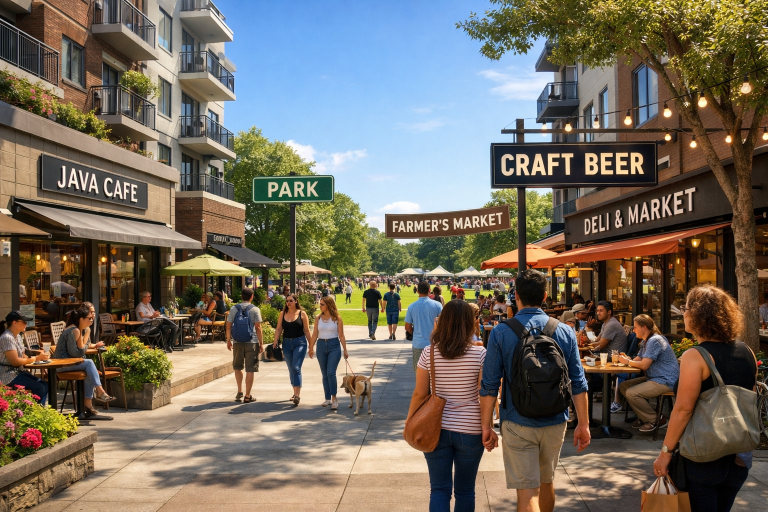
Mixed-use developments are gaining popularity not just for their convenience but for their ability to create vibrant, walkable environments. Residents benefit from having shops, cafes, gyms, and entertainment within steps of their door. Such neighborhoods often see enhanced social interaction and safety, since increased foot traffic and passive surveillance from businesses and residents alike create a stronger sense of community. Developers are redesigning public spaces, incorporating art and public installations, and supporting local entrepreneurs to give each neighborhood a distinct character and sense of place.
Affordability Challenges and Community Responses
With housing prices on the rise, affordability remains a significant concern. Communities are addressing this by implementing policies that encourage the development of affordable housing units and offering incentives for first-time buyers.
Local governments are taking creative approaches by working with nonprofit organizations, leveraging public-private partnerships, and revising zoning laws to support accessory dwelling units and multifamily housing. These solutions help maximize existing land use and provide lower-cost options while preserving neighborhood character. Community land trusts and shared equity programs are also being established in some areas to help residents build wealth through homeownership while keeping properties affordable for future buyers.
Further, many municipalities are developing educational initiatives to empower buyers with the knowledge and resources necessary to make informed decisions, from down payment assistance to credit counseling. Such holistic approaches are instrumental in addressing systemic challenges and ensuring homeownership remains accessible to a diverse range of households.
Looking Ahead: The Future of Homebuying and Community Development
As homebuying trends continue to evolve, communities that thrive will be those that prioritize flexibility, inclusion, and resilience. Artificial intelligence and automation may soon play a larger role in matching buyers with homes, simplifying paperwork, and predicting demand down to the neighborhood block. There is also an increasing focus on health-conscious design, think spaces that promote wellness, air quality, and social connectivity, playing a key part in decision-making for buyers and planners alike.
Conclusion
Homebuying trends are more than just market statistics; they are powerful forces shaping the fabric of our communities. By understanding and adapting to these trends, communities can create environments that are inclusive, sustainable, and aligned with the evolving needs of their residents. The interplay between technological advancement, demographic shifts, remote work, and affordability challenges will continue to dictate the pace and style of community growth, making ongoing education and innovation essential for real estate agents, planners, and residents alike.
- Finding Your Dream Home in St. Paul, Minnesota: A Comprehensive Guide
- How Does Blockchain Technology Work Step by Step? (Simple Guide)
- Purchasing a Home in Danville, California: A Comprehensive Guide
- Streamlining Commercial Construction Projects with Modern Technology
- Transforming Your Bathroom: The Benefits of Converting a Tub to a Walk-In Shower